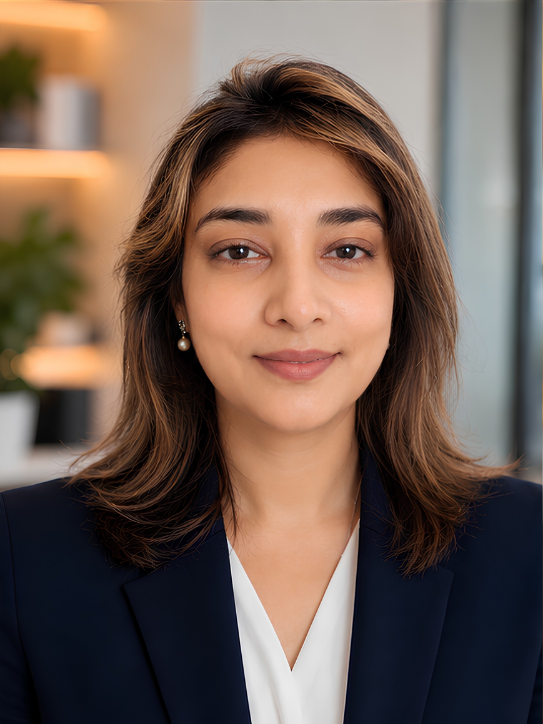
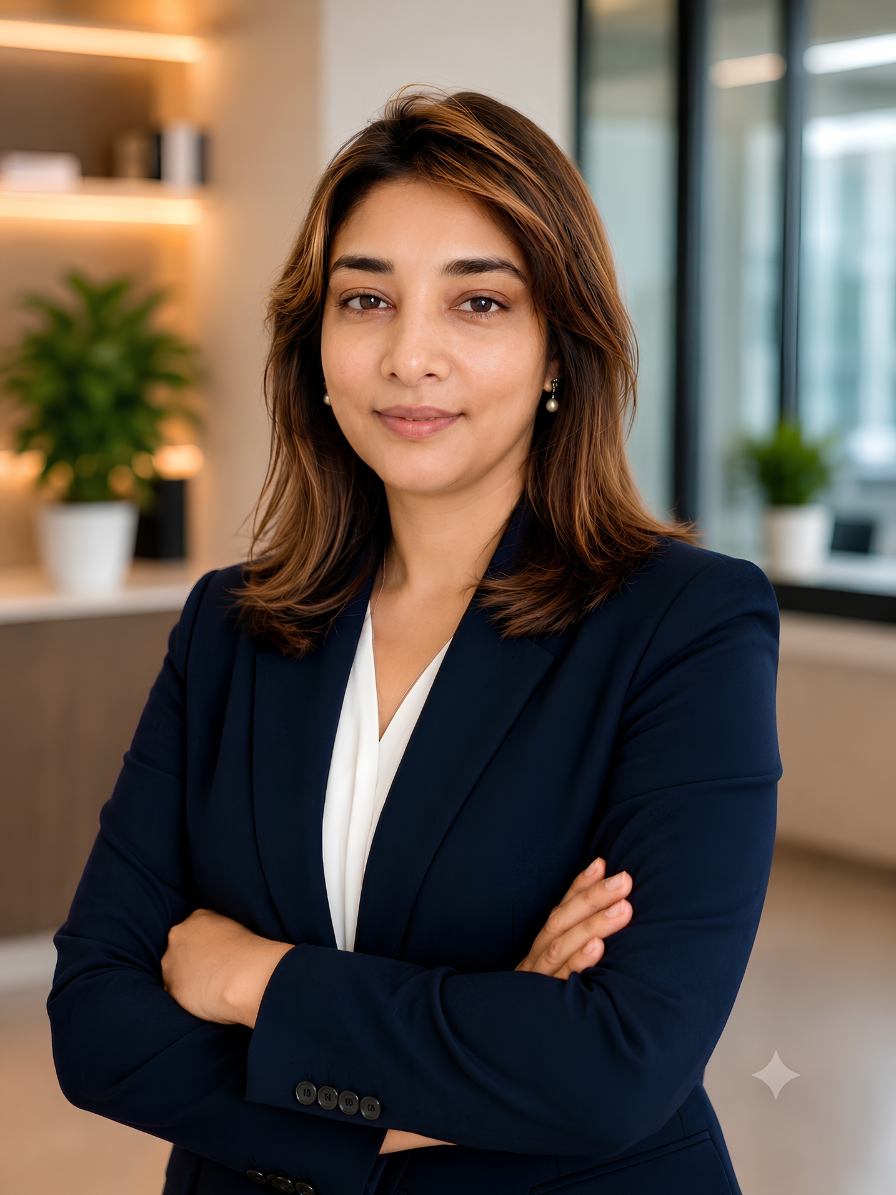
This South Asian Heritage Month, we are turning our attention to one of the biggest conversations currently shaping women's health: the transition from PCOS to PMOS, and what it means for the millions of women whose experiences have long been overlooked by healthcare systems.
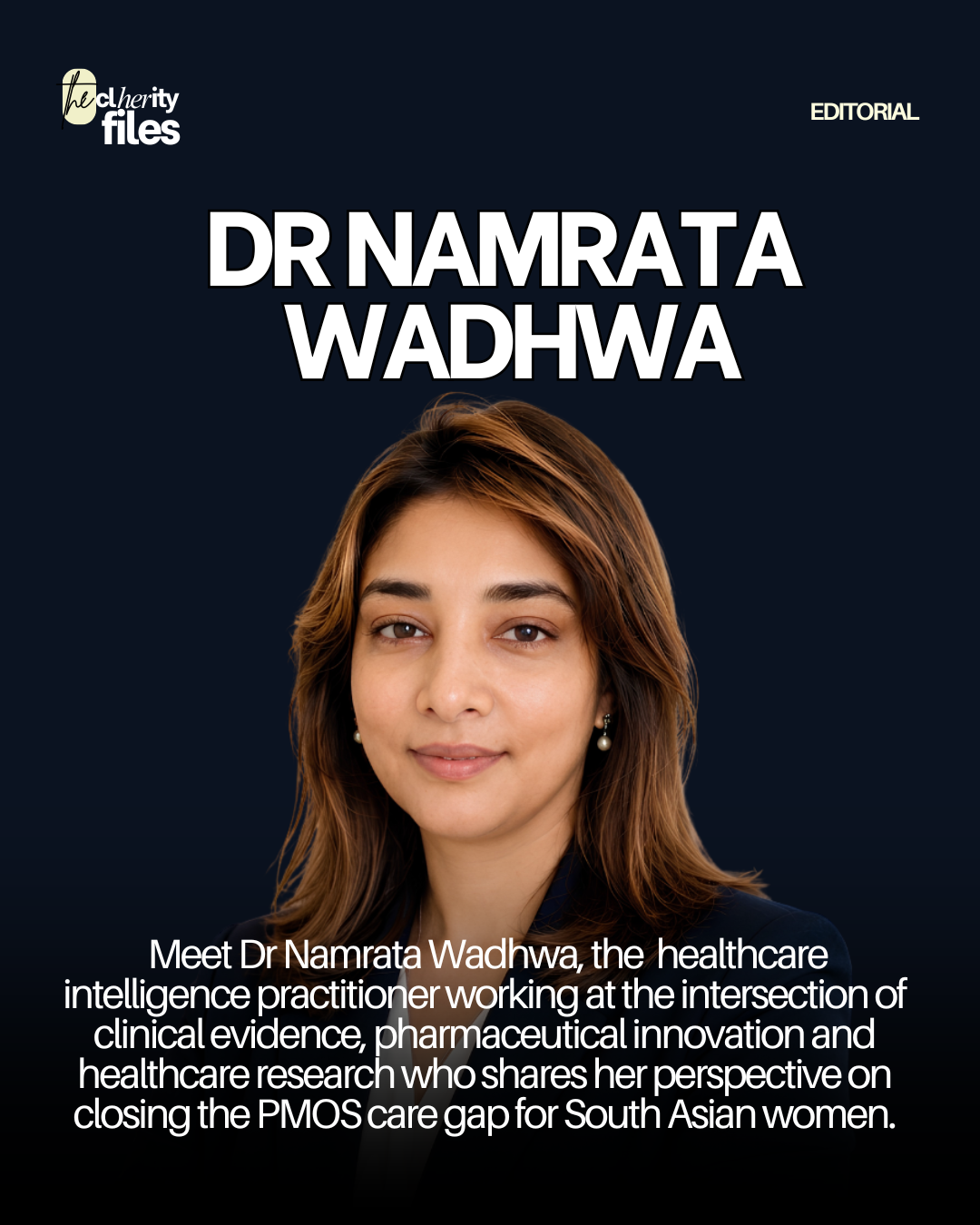
Few people are better placed to explore that conversation than Dr Namrata Wadhwa. A gold medallist dental surgeon turned healthcare intelligence practitioner, Dr Wadhwa now works at the intersection of clinical evidence, pharmaceutical innovation and healthcare research, helping organizations understand where medicine is heading and how scientific discoveries translate into real world care. Earlier this year, she also wrote about the global transition from PCOS to PMOS, offering an important perspective on why changing the name is only the first step towards changing outcomes for women.
In this edition of Clherity Files, we speak with Dr Wadhwa about why South Asian women continue to experience delayed diagnoses, how healthcare systems can better recognize the unique metabolic risks within this community, what role technology and artificial intelligence may play in the future of PMOS care, and why listening to women's lived experiences must become just as important as measuring their clinical outcomes.
When you spend time tracking R&D and patents in women's health, you quickly realize one thing: a name change, on its own, rarely changes anything. But what’s happening with the shift from PCOS to PMOS is different. This isn’t just about changing a few letters; it’s backed by an immense amount of global work.
We’re talking about a collaborative effort involving 56 patient and medical organizations, supported by more than 22,000 survey responses. The goal was to correct a label that wrongly suggested ovarian cysts were the defining feature of the condition. For decades, that name obscured the true hormonal and metabolic nature of the syndrome, contributing to delayed diagnoses, inadequate care, and years of unnecessary struggle for patients.
From where I sit, this is absolutely the beginning of a much broader systemic shift. Names matter because they influence how research funding is allocated, how healthcare systems classify conditions, and, quite honestly, how clinicians prioritize them during a busy outpatient clinic.
The Endocrine Society has also highlighted that the previous name reduced a complex, lifelong hormonal disorder to a misunderstanding about ovarian cysts, leading directly to missed diagnoses and suboptimal care.
Whether this becomes a genuine turning point depends entirely on what happens next. We are currently in a critical three-year transition period, and the real work lies in updating clinical guidelines, electronic health records, educational materials, official disease classification systems, and future research publications.
The International Guidelines, used across 195 countries, are expected to formally adopt the PMOS terminology in 2028. So, in my view, the name change is not the finish line. It’s simply the starting point.
South Asian women are disproportionately affected by PMOS and often develop metabolic complications at lower body weights than many other populations. Yet diagnosis is still frequently delayed. Looking at the evidence, where do you think healthcare systems continue to miss opportunities to better support South Asian women?
The truth is that healthcare systems are missing opportunities to support South Asian women at almost every stage of the PMOS care pathway. At the heart of the problem is the fact that our diagnostic baselines are fundamentally flawed for this population.
Take clinical practice, for example. We still rely heavily on standard BMI thresholds that fail to account for the South Asian "thin-fat" phenotype. These are women who carry higher levels of body fat and lower muscle mass than White women with the same BMI.
The World Health Organization explicitly recommends lower BMI cut-offs for Asian populations, classifying overweight at a BMI of 23 rather than 25 because metabolic risks emerge much earlier. Yet clinical systems continue to overlook women who appear to be "normal weight" on paper but are already experiencing significant metabolic dysfunction. Dismissing a patient's condition as mild simply because she falls within standard weight metrics isn't just an oversight; it’s a clinical error.
We also fail to routinely assess highly visible clinical markers, such as acanthosis nigricans, the dark, velvety patches of skin that are a strong indicator of severe insulin resistance. One South Asian study found this sign in nearly two-thirds of patients, yet it is still not consistently checked during routine assessments.
Then there is the research gap. Our approach to funding and conducting genetic research remains fragmented. We know that variants of the DENND1A and THADA genes are associated with androgen production and insulin regulation in South Asian women, but the findings vary significantly across populations.
For example, studies from South India found a strong association between the DENND1A variant rs10818854 and PMOS risk, while THADA showed no significant relationship. However, research in Bangladesh revealed the opposite pattern: the DENND1A variant rs10986105 was significantly associated with the condition, while rs10818854 showed no meaningful correlation. These inconsistencies highlight the urgent need for more localised, population-specific research.
In fact, Bangladesh had not conducted a single genetic association study on PMOS prior to 2024. That is deeply concerning when you consider that the condition accounts for more than one-third of infertility cases in some hospitals there.
Even our prevalence data remains inconsistent. Estimates in India range from 5.8% to 10% in some datasets, while a larger 2024 study suggests the condition may affect nearly one in five women.
Finally, we are still doing far too little to address the impact of cultural stigma. Reproductive health remains a taboo topic in many South Asian households, meaning early symptoms often go unspoken for years. Without culturally competent education and outreach, healthcare systems continue to miss the opportunity to identify this metabolic condition before it progresses.
Ultimately, until healthcare systems update their diagnostic baselines to reflect South Asian biology, invest meaningfully in population-specific genetic research, and actively address cultural barriers, thousands of women will continue to face delayed diagnoses and inadequate care.
From your experience working in healthcare intelligence, we now have stronger evidence, a new name, and updated international guidance. What needs to happen next to ensure these changes actually reach women sitting in GP surgeries rather than remaining within academic journals and conference halls?
This is precisely the gap between research and clinical practice that the 2023 International Evidence-Based PCOS Guideline acknowledged with remarkable honesty. Although the previous 2018 guideline was adopted across 196 countries, the authors recognised that many frontline clinicians are still not up to date with the latest evidence. As a result, patients continue to receive inconsistent care.
To close that gap, we have to focus on what actually happens inside a local clinic. High-quality evidence sitting in a medical journal or guideline has little impact unless it is translated into something a GP can use during a ten-minute consultation.
That means better training for healthcare professionals, clear and practical care pathways, and equitable access to primary care clinicians who know when and how to refer patients to specialist services.
First and foremost, the new PMOS terminology and South Asian-specific metabolic thresholds need to be integrated directly into the clinical software GPs use every day. The guidance should appear within the workflow at the point of care, rather than relying on clinicians to remember information from lengthy guideline documents.
Secondly, investment in primary care is just as important. Diagnostic delays are often caused not only by knowledge gaps but also by fragmented referral pathways. If clinics lack the resources to coordinate care effectively, patients inevitably fall through the cracks.
Thirdly, we need to invest in public education. This is where patient organizations can make a genuinely meaningful difference. We need sustained, well-funded awareness campaigns similar to those the Endocrine Society has committed to delivering throughout the PMOS transition.
Ultimately, meaningful change will only happen when evidence is embedded into clinicians' everyday workflows rather than left in lengthy documents that healthcare professionals are expected to read, memorize, and apply independently.
For decades, the conversation around PMOS has been dominated by fertility. Yet we now understand it as a lifelong hormonal and metabolic condition with implications for cardiovascular health, mental wellbeing, insulin resistance, and more. Why do you think healthcare has been so slow to broaden that conversation?
I think a large part of the reason is the old name itself. It centered the conversation almost entirely around the ovaries. In many South Asian communities, it is often a missed period or concerns about fertility that prompt women to seek medical care in the first place, so the healthcare system has naturally focused on those issues above everything else.
Updating the name to reflect a true multisystem disorder has the potential to be a turning point; not only for patient care, but also for clearer communication and how global research funding is prioritized.
The mental health dimension is a perfect example of how much has been overlooked. A 2025 review published in Comprehensive Psychiatry described PCOS-related depression and anxiety as an "overlooked" burden. The authors identified delayed diagnosis and dismissive patient–practitioner interactions as key contributors to worsening psychological wellbeing.
The same review referenced a Canadian study showing that, on average, women wait more than four years and consult at least four different healthcare providers before receiving a diagnosis. That tells us the system is still organized to treat whichever symptom brings a woman through the door, rather than recognizing a lifelong, multisystem condition.
Research also suggests that up to 40% of women with this condition experience significant mental health challenges, including anxiety and depression. These difficulties are driven by a double burden: the biological effects of hormonal imbalance and insulin resistance, alongside the cultural pressures surrounding fertility, body image, and visible symptoms.
To effectively reduce long-term cardiovascular and metabolic risks, care has to extend far beyond the gynaecologist's office. Women need access to multidisciplinary teams that include specialists across endocrinology, primary care, nutrition, mental health, and reproductive health.
The 2023 International Guideline explicitly recommends this team-based approach. Unfortunately, many healthcare systems have yet to invest in or implement these integrated models of care.
If you were given the opportunity to change just one thing about how PMOS is recognized, researched, or managed within healthcare systems, what would it be, and why do you believe that single change would have the greatest impact on women’s lives, particularly for South Asian women?
If I could change just one thing, it would be to stop leaving ethnicity-specific screening to individual clinical judgement and instead make it a mandatory, hard-coded part of the diagnostic pathway.
At the moment, international guidelines treat lower BMI and waist circumference thresholds for South Asian women as recommendations that clinicians may choose to apply. In my view, that needs to change.
The evidence behind this isn't subtle. South Asian women develop type 2 diabetes between five and fifteen years earlier than White European populations, and they do so at significantly lower BMIs. Women with PMOS from South Asian backgrounds also tend to have higher insulin levels, lower insulin sensitivity, and more severe metabolic symptoms at a younger age than their Caucasian counterparts.
Under the current system, a South Asian woman who appears to be at a "normal" weight can leave a clinic without receiving any metabolic assessment simply because she has not crossed a screening threshold developed using predominantly Western populations. That represents a significant blind spot in healthcare.
By embedding lower, population-specific thresholds directly into standard diagnostic pathways, we could identify cardiovascular and metabolic risk much earlier in the population that stands to benefit most.
Of course, faster diagnosis, improved mental health support, and culturally competent care are all essential. But making ethnicity-specific screening routine rather than optional is, in my view, the single most practical and impactful step we can take to prevent long-term disease instead of managing its consequences years later.
Healthcare often measures success through clinical outcomes, but women living with PMOS frequently describe the greatest burden as the years spent feeling dismissed, misunderstood, or blamed. Do you think healthcare systems are measuring the right outcomes when it comes to PMOS, or are we still overlooking the patient's experience?
The short answer is no; we aren't measuring the right outcomes. In fact, the evidence on women's experiences of diagnosis makes that clear.
The largest study to date on time to diagnosis, published in the Journal of Clinical Endocrinology & Metabolism, surveyed nearly 1,385 women across 48 countries. It found that one in three women waited more than two years for a diagnosis, almost half saw three or more healthcare professionals before receiving an answer, and only 15.6% were satisfied with the information they were given at the time of diagnosis.
None of that emotional exhaustion appears on a standard hospital dashboard.
Clinical metrics are valuable for tracking treatment outcomes and laboratory results, but they fail to capture the cumulative impact of repeatedly being dismissed or misunderstood within the healthcare system.
A similar UK study followed women to the age of 35, comparing those with a formal diagnosis to those whose symptoms remained unrecognized. It found that obtaining a diagnosis still often requires consultations with multiple specialists. Some clinicians worry that diagnosing women with milder presentations may do more harm than good, but the evidence suggests the opposite. It is prolonged uncertainty, not the diagnosis itself that has the greatest psychological impact.
Women who remained undiagnosed continued to experience high rates of depression, demonstrating that the emotional burden stems from living with unmanaged symptoms rather than from having a medical label attached to them.
This tension between clinical caution and the lived experience of patients is exactly why we need to measure patient-reported outcomes alongside laboratory and clinical indicators.
The 2023 International Guideline explicitly acknowledges the high levels of dissatisfaction surrounding PMOS diagnosis and care and calls for large-scale awareness campaigns targeting both healthcare professionals and the public.
Until healthcare systems measure the patient experience with the same rigor they apply to blood glucose, hormone levels, and other clinical markers (including the time taken to reach a diagnosis, the number of clinicians a woman must see, and whether she feels informed and supported) we will continue measuring what is easiest to record, rather than what matters most to patients.
If you could redesign the patient journey for a woman diagnosed with PMOS tomorrow, what would that pathway look like? What do you think every woman should routinely receive that too many currently leave without?
Instead of the usual fragmented journey, where a woman might see a dermatologist for acne, a gynaecologist for irregular periods, and perhaps, if she is fortunate, be referred for mental health support, care should begin with a single, coordinated assessment.
This fragmented approach is one of the main reasons it takes so long for women to receive an accurate diagnosis. The 2023 International Guideline explicitly recommends an integrated, multidisciplinary model with clear referral pathways from primary care to specialist services, ensuring women do not have to navigate multiple departments on their own.
In practical terms, I believe every woman should routinely leave her diagnostic appointment with three things that far too many currently do not receive.
First, a written guide in plain language. Women deserve a clear, accessible explanation of what PMOS is, what it is not, and what the diagnosis means for their long-term health. This is particularly important given that only 15.6% of women in the Journal of Clinical Endocrinology & Metabolism study reported being satisfied with the information they received at diagnosis.
Second, a comprehensive metabolic assessment. Every woman should have a baseline cardiovascular and metabolic evaluation that uses ethnicity specific thresholds rather than generic BMI cut offs, particularly given how much earlier and more severely South Asian women develop insulin resistance.
Third, mental health screening should be built into the diagnostic pathway. It should be a routine part of the appointment rather than something women are expected to request themselves. We know that delayed diagnosis and dismissive healthcare experiences are closely associated with anxiety and depression, so psychological wellbeing should never be treated as an afterthought.
None of these changes require a breakthrough in medical science. They simply require us to treat the day a woman receives her diagnosis as the beginning of coordinated care rather than the end of her search for answers.
Many South Asian women grow up in environments where conversations around periods, hormones, and reproductive health remain deeply stigmatized. How much of the delay in diagnosis is cultural, how much is clinical, and how do we begin addressing both at the same time?
It is both, and the reality is that the cultural and clinical barriers continually reinforce one another.
On the cultural side, the barriers are very real. Research comparing South Asian and White British women found that South Asian participants reported lower levels of knowledge about menstruation, greater secrecy around discussing periods, and a tendency to avoid everyday activities during their menstrual cycles. They also described experiencing subtle discrimination within healthcare settings.
That combination of silence at home and negative healthcare experiences often leaves women feeling embarrassed or ashamed to seek help. Fertility specialists working with South Asian patients report similar findings. Reproductive health is still rarely discussed openly within many families and communities, which naturally delays the point at which women feel comfortable speaking about their symptoms, even with a healthcare professional.
The clinical side of the problem only compounds these delays. Women who finally overcome cultural stigma often enter a healthcare system where diagnosis can still take years and involve multiple consultations before they receive answers.
These two forms of delay build upon one another. A woman who has already found the courage to speak openly about symptoms that have long been considered taboo then enters a healthcare system that is often not designed around her biological risk profile or her lived experience.
Addressing this requires action on both fronts simultaneously. We need culturally informed first points of contact, ideally involving South Asian clinicians or community health workers who can help normalize conversations around menstrual and reproductive health while creating environments where women feel heard and respected.
At the same time, healthcare systems must adopt ethnicity specific screening thresholds as standard practice. That way, when women do seek care, the system is equipped to recognize their risks quickly rather than adding further clinical delays to the cultural barriers they have already overcome.
If a 19-year-old South Asian woman had just been diagnosed with PMOS today, what is the one thing you would want her to understand before she opens social media, starts Googling, or begins comparing her journey to someone else’s?
The very first thing I would want her to understand is that PMOS is not fundamentally a fertility condition.
If she goes online today, she is likely to encounter content that frames it almost entirely through the lens of fertility. However, the name was changed because both patients and clinicians recognized that focusing solely on ovaries and cysts obscured the true nature of the condition. PMOS is a complex disorder that affects hormonal, metabolic, dermatological, reproductive, and mental health.
For a 19-year-old South Asian woman in particular, the metabolic aspects of the condition deserve attention long before fertility becomes an immediate concern. South Asian women are more likely to develop insulin resistance and metabolic complications earlier and at lower body weights than many other populations. The priority should be protecting her long term cardiovascular and metabolic health, not creating anxiety about an imagined countdown to motherhood.
I would also want her to know that if her diagnosis came after a long and frustrating journey, she is far from alone. It does not mean there is something uniquely wrong with her, nor does it mean she was overreacting her symptoms. Across the world, delayed diagnosis and unsatisfactory care remain the norm rather than the exception.
Comparing her symptoms, timeline, or body with what she sees on social media will only add unnecessary pressure because PMOS presents differently in every individual.
The most important thing she can do is tune out the noise and find a healthcare professional who sees her as a whole person. She deserves a care plan that brings together metabolic screening, mental health support, reproductive healthcare, and long term follow up, rather than one that treats each symptom in isolation as it appears.
Throughout our conversation, one idea surfaced again and again: evidence only matters when it changes lives.
The transition from PCOS to PMOS may represent an important milestone, but as Dr Namrata Wadhwa makes clear, the real work begins long after a new name is introduced. It lies in ensuring that research informs clinical practice, that healthcare systems recognise the unique experiences of different communities, and that women are no longer expected to navigate delayed diagnoses or fragmented care on their own.
For South Asian women in particular that means building healthcare systems that are as culturally informed as they are scientifically rigorous, where earlier recognition, personalised care and equitable access become the standard rather than the exception.
As PMOS enters this next chapter, perhaps the greatest measure of progress will not be the terminology itself, but whether future generations of women are diagnosed earlier, supported more thoughtfully and finally receive the care that decades of evidence have been calling for.
Stay in the loop
Get new editorials, articles and event news from Clherity straight to your inbox.
Sign up →