For generations, women’s health has been forced to fit inside clinical categories that were never quite large enough to hold the true complexity of women’s lives. Few conditions demonstrate this systemic limitation more clearly than Polycystic Ovary Syndrome. For decades, medicine has viewed PCOS (PMOS) through the narrow lens of the ovaries and fertility, largely ignoring the vast hormonal and metabolic web that defines the actual experience of the condition.
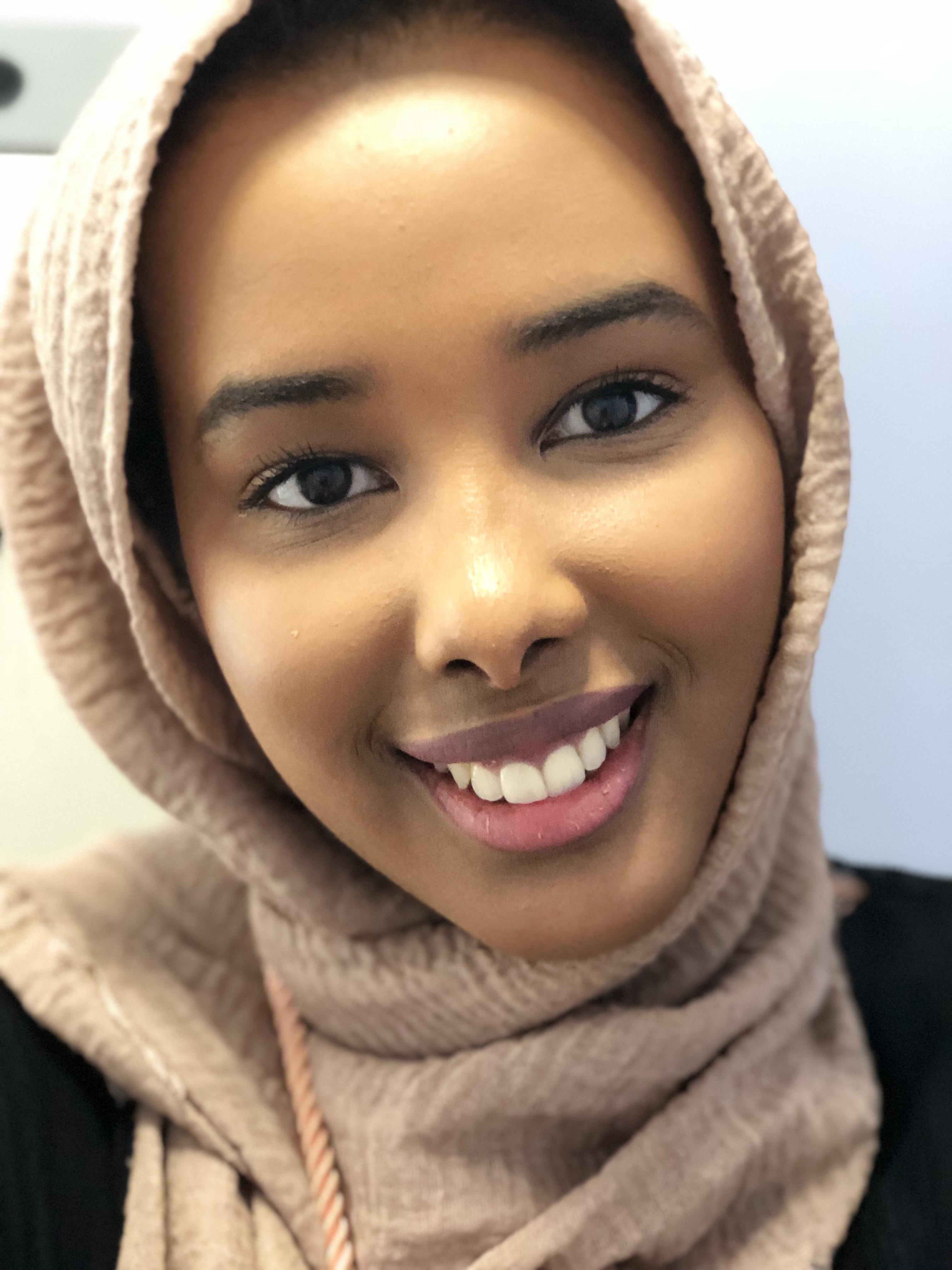
Dr. Amina Hersi has spent her career dismantling this narrow perspective. As a practicing GP and women’s health advocate, Dr. Hersi operates at the progressive intersection of clinical medicine and digital innovation. Her work is reshaping how patients navigate and experience healthcare. In 2021, she founded PolyBiotics, a women’s health company born from the unique convergence of her medical expertise and her personal journey of living with PCOS (PMOS). This duality of clinical knowledge and lived experience grants her a rare, panoramic vantage point from which to evaluate where modern care stands and where it must go next.
The brilliance of her perspective lies in her intellectual honesty. In a wellness industry often dominated by loud certainty and quick fixes, Dr. Hersi possesses the rare willingness to sit with scientific nuance. On the gut microbiome, she champions the emerging science without overstating what the data can currently prove. On artificial intelligence, she welcomes technological transformation while fiercely maintaining that digital tools must enhance, rather than replace, human clinical judgment.
When addressing health inequalities, her advocacy moves far beyond superficial representation. She argues that true equity cannot be achieved by merely updating the imagery on patient leaflets. Instead, it requires a profound restructuring of the very foundation of medicine, demanding diverse representation within clinical trials, medical curricula, and the data algorithms that dictate the future of care.
Her insights arrive at a vital cultural inflection point. The dialogue surrounding women's health is shifting, moving away from passive management and toward a sophisticated renaissance of personalized care.
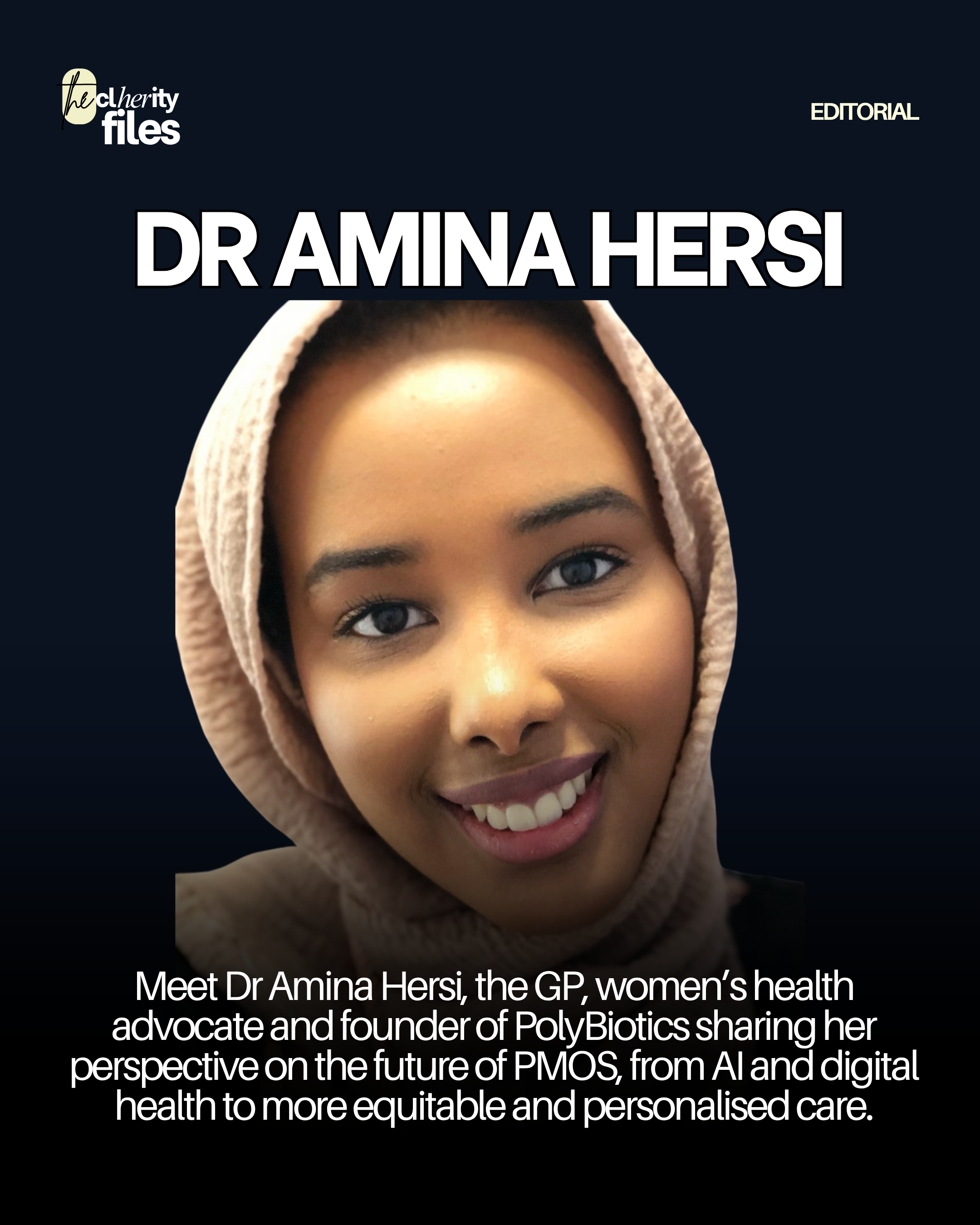
We spoke to Dr Amina Hersi about the evolution of PMOS, the promise and limitations of digital healthcare, what AI could mean for women's health, the science behind the microbiome and what genuinely equitable care should look like.
You have built a career spanning general practice, digital health innovation and healthcare education. Looking across those experiences, what do you think is the biggest gap in how women with PMOS are currently supported, and why has that gap persisted for so long?
The biggest gap in my opinion is where PMOS, previously known as PCOS, has sat in the minds of people, including clinicians and scientists.
The name itself heavily centred the condition around the ovaries. Polycystic ovary syndrome was never only about cysts, which aren't actually cysts in the traditional sense, and it was never solely a reproductive condition. Like many other women's health conditions, it was labelled as reproductive and I think that has limited the attention and funding it has received.
Renaming it Polyendocrine Metabolic Ovary Syndrome helps reframe the condition as the top-to-toe endocrine and metabolic condition it is.
There is also really interesting research looking at the children of women with PMOS. Some research suggests that male offspring can also have increased metabolic risks, which again makes you question this idea that we can look at the condition purely through the ovaries.
It may be completely coincidental, but alongside the name change and this wider understanding of the condition, it does feel like we are starting to see more focus on PMOS. It's still not enough though. This is an incredibly common condition and it remains understudied and under-researched.
A significant part of your work involves designing digital healthcare tools that help people access safe and reliable medical advice. As digital health continues to evolve, how do you see technology changing the way women with PMOS are diagnosed, monitored and supported over the next decade?
Digital health has this whole layer of useful data that traditional healthcare hasn't always been very good at capturing. I can see a future where that data unlocks a predictive element of healthcare. Instead of waiting for someone to become unwell or develop obvious symptoms, we may be able to identify patterns much earlier and intervene before a condition develops or progresses.
The digital age also means healthcare can become much more accessible, and as women there are already so many barriers to accessing healthcare and being listened to. Digital healthcare can bridge some of those gaps and connect us with experts we may never otherwise have been able to access. I'm particularly interested in what happens when we start connecting wearables, patient-reported information and health records. Something as simple as cycle length could be monitored over time rather than relying on a woman remembering to bring it up during a ten-minute appointment.
In PMOS, very infrequent periods can increase the risk of changes to the womb lining and, over time, womb cancer. Imagine if our technology could recognise those patterns and prompt earlier intervention. The same applies to metabolic health. Women with PMOS have an increased risk of type 2 diabetes and we know that early intervention matters.
As a Black woman, this is particularly important to me because there are also racial disparities in cardiovascular and metabolic health. Digital health has the potential to level some of that playing field. It puts much more information about our health directly into our hands.
Artificial intelligence is becoming increasingly embedded in healthcare, from symptom checkers to clinical decision making. Where do you see the greatest opportunity for AI to improve care for women living with PMOS, and where do you think we should remain cautious?
AI is only as unbiased as the people building it. It's important that AI is representative of all the people who will be using it. We know models can have blind spots if the information going in hasn't considered differences or risks that disproportionately affect people because of their sex, race or ethnicity. There are huge opportunities though.
As women, there may be things we find less embarrassing or difficult to initially discuss with AI than with a real person, it's accessible. You can ask a question when it occurs to you rather than waiting weeks for an appointment. It can also potentially spot patterns across huge amounts of information that a human simply couldn't process in the same way.
But AI doesn't have human discernment. It doesn't have the instinct that clinicians develop through experience, and it isn't infallible. AI can also confabulate, essentially making up information, and in healthcare that obviously carries risk. This is why I think the human in the loop is essential.
AI can be an incredible tool, but when it comes to your health there need to be the right guardrails and, particularly where clinical decisions are being made, a human clinician still needs to be involved.
As the founder of PolyBiotics, you have explored the connection between the gut microbiome and women's health. Interest in gut health has grown rapidly but so has misinformation. Based on the evidence we have today, what should women living with PMOS realistically understand about the relationship between the gut microbiome and the condition?
Gut health has become a massive buzzword, and I think the marketing has moved much faster than the evidence. There is some genuinely fascinating research into the gut microbiome and PMOS. We have seen differences in the gut microbiome of women with PMOS and there are possible links with things like insulin resistance, inflammation, metabolism and hormones.
The problem is we don't fully understand what that means yet. Is the gut microbiome contributing to PMOS? Is PMOS changing the gut microbiome? Or are both happening and influencing each other? We don't know yet, and I think it's important to be comfortable saying that.
Where I become uncomfortable is when that early science is translated into women being told they need to "heal their gut" to fix their hormones or reverse PMOS. We simply don't have the evidence to make claims like that.
There are things that support gut health that are generally good for our health anyway. Eating enough fibre, having variety in our diets, eating plenty of plants, exercising and looking after our metabolic health. But that is very different from claiming that a particular probiotic or gut protocol treats PMOS.
The microbiome is an exciting area of research. I just don't think we should pretend the science is further ahead than it actually is.
You have spoken publicly about the importance of recognising how disease presents across different skin tones and the need to address racial bias in healthcare. Women from Black, Asian and other minority ethnic communities often experience delays in receiving a PMOS diagnosis. From your perspective, what changes are needed to ensure healthcare becomes genuinely equitable for every woman?
Representation needs to happen at every level of healthcare, not just putting a Black or Asian woman on a patient leaflet. It needs to be in medical education, textbooks, research, clinical trials, datasets and the technology we are building.
We have historically taught medicine using a very narrow representation of what disease looks like. Even something as basic as recognising changes in someone's skin can be more difficult if you've only ever been taught what that change looks like on white skin, PMOS has similar problems. Things like unwanted hair growth, acne, hair thinning and skin changes can present differently between women.
We also need to be aware of the extreme opposite. Hirsutism is unwanted body hair and what we gauge is the distress it causes. Unfortunately, I have heard of people being dismissed by their doctors because people with their ethnicity "tend to be hairier".
Women already have experiences of symptoms being dismissed as stress, lifestyle or weight. When you add racial bias into that, some women have another barrier to overcome before they can even get the right diagnosis.
For me, equity doesn't mean treating every woman identically. It means making sure every woman has the same opportunity to be listened to, diagnosed and treated properly.
And you can't really create equitable healthcare without involving the people experiencing those inequalities in designing it.
If you could redesign the patient journey for a woman diagnosed with PMOS tomorrow, what would that pathway look like? What do you think every woman should routinely receive that too many currently leave without?
I'd start with something incredibly basic. Every woman diagnosed with PMOS should leave with a plan. Too many women are given the diagnosis, offered the contraceptive pill, told to lose weight or told to come back when they want to get pregnant. PMOS is so much bigger than that.
I would want every woman to understand what PMOS actually is, what her own presentation looks like and what needs monitoring over time. What's happening with your periods? What's your risk of diabetes? What is your blood pressure? Are we protecting the lining of your womb? What symptoms are actually bothering you?
And I think that last question is important.
Not everyone with PMOS wants to lose weight, not everyone wants to get pregnant, not every woman is bothered by unwanted hair growth. We need to stop deciding what women's priorities should be and ask them.
I would also want proper follow-up. PMOS is a lifelong condition, what matters to someone at 19 may be completely different at 30, 40 or during perimenopause. I don't want women leaving an appointment with a diagnosis and then having to go home and Google what it means and take advice from social media instead of reputable sources.
Looking ahead, what gives you the greatest optimism for the future of PMOS care, and what do you hope women will experience differently ten years from now than they do today?
Women themselves probably give me the most optimism. Women are asking questions, they’re reading the research, they’re sharing their experiences and they're challenging misinformation but they're also challenging medicine when medicine hasn't done enough. I think that's powerful.
We're also reaching a point where technology, wearables, AI and much larger amounts of health data could completely change what we understand about PMOS. I hope in ten (10) years we aren't still treating every woman with PMOS as though she has the same condition. I want us to understand the different presentations, different risks and why one woman can experience PMOS completely differently from another.
I hope a teenager doesn't have to spend years knowing something isn't right before somebody listens. I hope women aren't automatically told to lose weight regardless of why they've come to see their doctor. I hope women who don't want children aren't made to feel that their PMOS somehow matters less.
And I hope women aren't spending hundreds of pounds trying to navigate misinformation online because nobody properly explained their condition when they were diagnosed.
Most of all, I hope we start caring about the health of women with PMOS across their whole lives, not just when they want to have a baby.
The future of women's health MUST listen differently.
Perhaps the most striking thread running through Dr Hersi's perspective is not technology, nutrition or even the changing language around PMOS but ‘attention’
Attention to the data women are already generating, attention to the symptoms they have been taught to minimise, attention to the ways race and representation shape what medicine recognises, attention to what women want from their care.
There is also something quietly radical in her insistence on uncertainty, because in an online health landscape that rewards definitive answers, Dr Hersi is willing to say when the evidence is still developing. The microbiome may be promising, but the science is not finished. AI may transform healthcare, but it cannot replace clinical judgement. Digital data may help predict risk, but only if the systems collecting it represent the people, they are supposed to serve.
That may be where the next chapter of women's healthcare begins not with another promise of a perfect solution, but with better questions, better data and a healthcare system prepared to listen to the answers.
For women living with PMOS, that shift could mean something remarkably simple, being seen before they have to become unwell enough to be noticed and being cared for as a whole person, across a whole lifetime, rather than as a reproductive problem waiting for a fertility appointment.
You don't have to figure it out alone
Join the Clherity community — a private space for women navigating PCOS together.
Join the waitlist →