The Dietitian Who Has PCOS, a PhD, and No Time for Bad Advice
Clherity Editorial

The Dietitian Who Has PCOS, a PhD, and No Time for Bad Advice

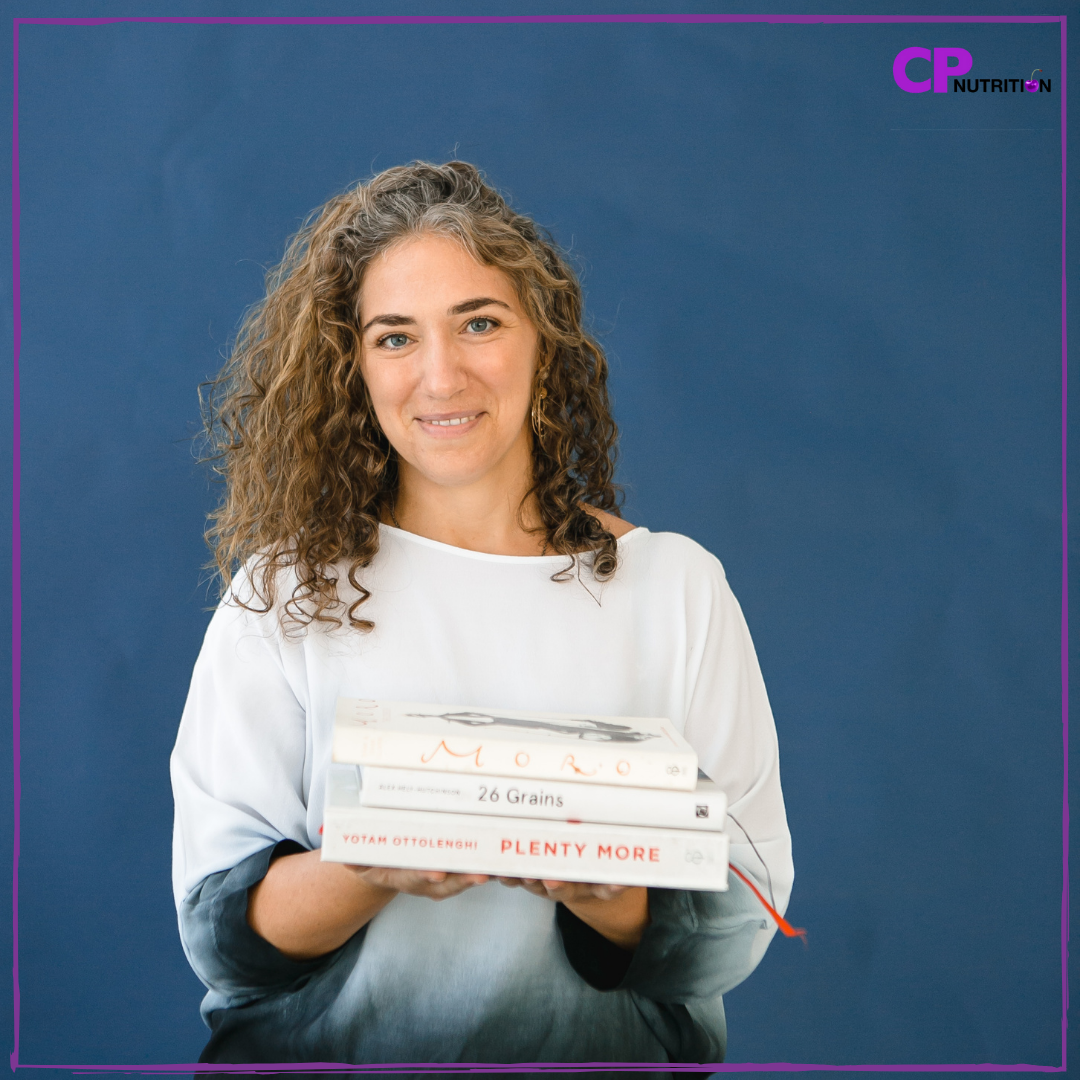
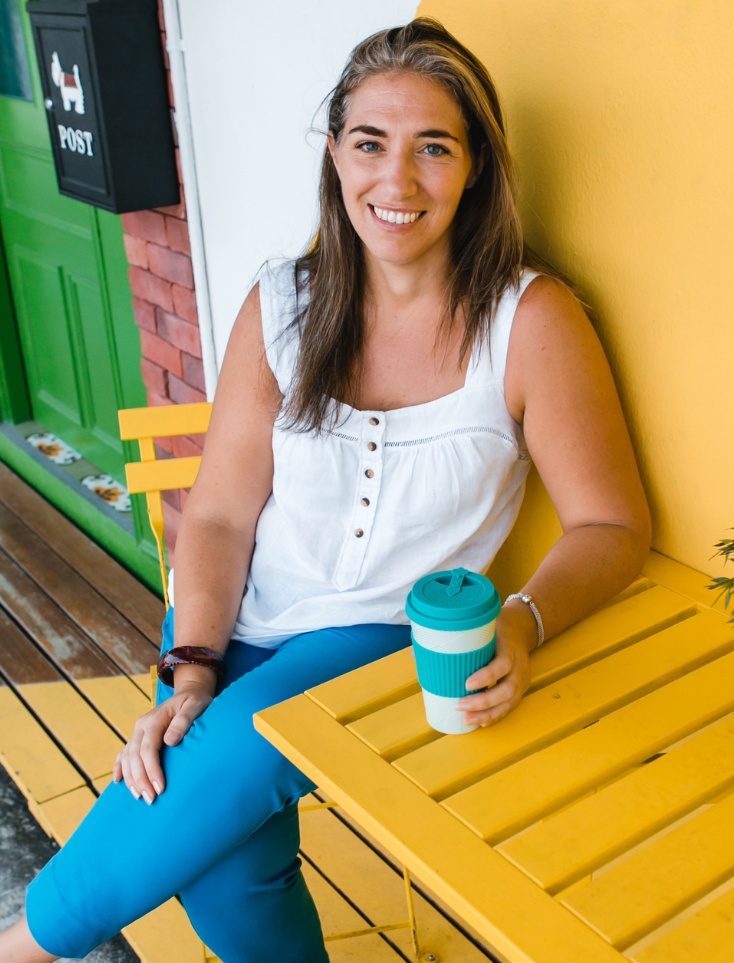
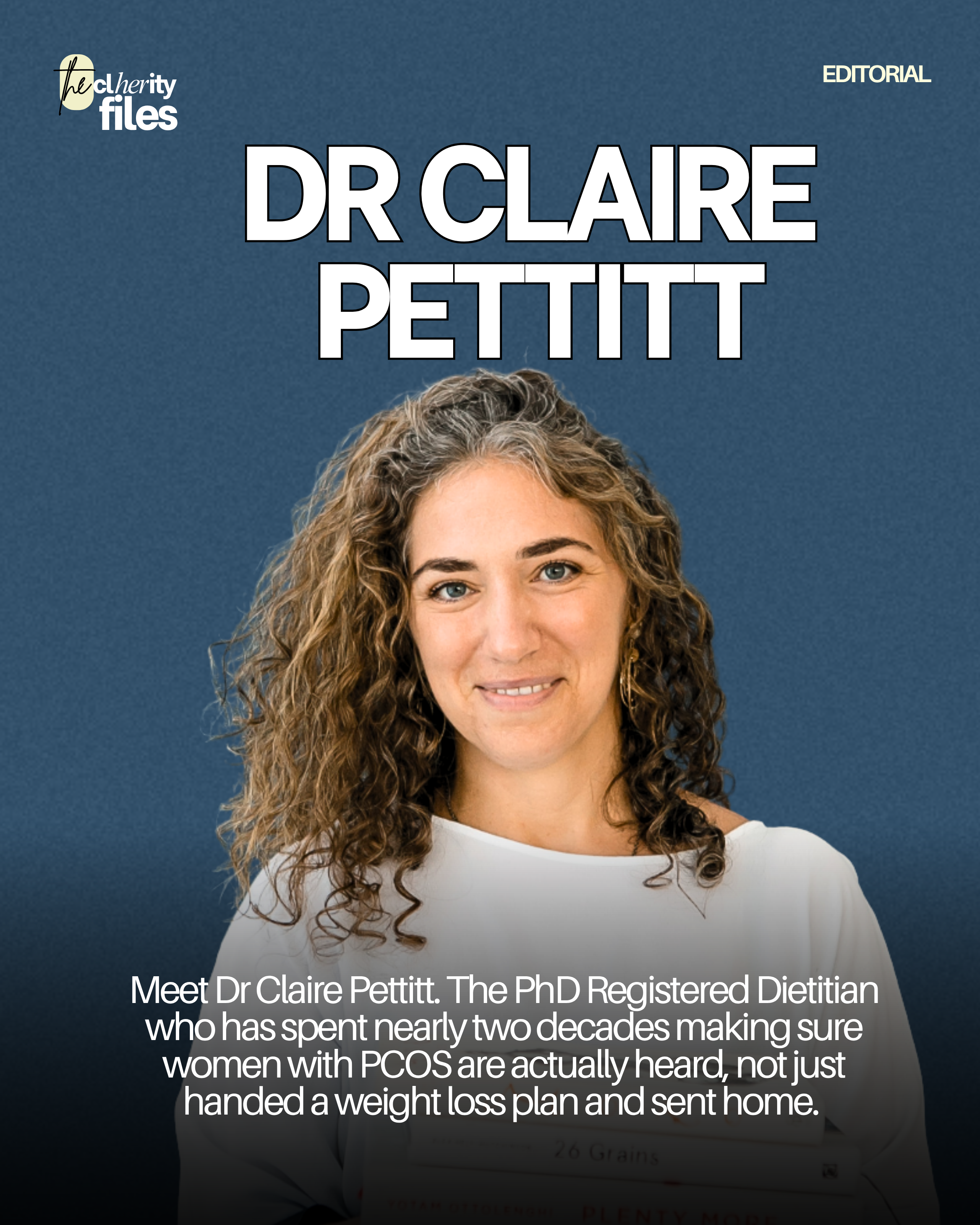
Dr Claire Pettitt, PhD Registered Dietitian, Adjunct Associate Professor, and one of the world's leading voices in PCOS nutrition, talks to Clherity about food freedom, the cultural blind spots in women's health, and why she always starts with education before she changes a single thing on your plate.

2026-07
Dr Claire Pettitt
Dr Claire Pettitt
Registered Dietitian, Adjunct Associate Professor
Interview by The Clherity Team

If you have spent any time in the PCOS space online, you will know the noise. The supplements, the thirty-day protocols, the influencers who have never sat across from a patient telling you that cutting carbs entirely is the only answer. It is exhausting, and for the millions of women navigating a condition that affects nearly every system in the body, it can feel genuinely hopeless. 

Dr Claire Pettitt is not interested in the noise. With a PhD from Imperial College London, nearly two decades in private practice across London and Singapore, a position as Associate Professor shaping the very first Dietetics programme in Singapore, and a chapter on PCOS in the most recent edition of the Manual of Dietetic Practice, she is one of the most rigorously credentialed voices in women's health nutrition working today. She is also, by her own account, a woman with PCOS, which means her expertise is not just academic, it is lived. 

We sat down with Dr Pettitt to talk about the cultural dimensions of PCOS care, the liberating and sometimes uncomfortable work of food freedom, why the gut-PCOS connection is criminally under addressed, and what she wishes every doctor who has ever handed a woman a weight loss leaflet and called it PCOS management would understand. 
QYou have built your career across two very different cities, London and Singapore. How has practising in both places shaped your understanding of how culture and food environment influence PCOS management? 
My experience living in both the UK and Singapore, as well as time in Spain and Guatemala, and coming from a multicultural family, has deepened my appreciation for the huge role culture and the food environment play in our food choices and health behaviours. Women's health issues, like PCOS, are not always acceptable topics in all cultures and commonly eaten and available foods differ from country to country and group to group. PCOS management has to be tailored to the individual and that includes not only their individual health issues but also their cultural and food preferences. 
QYou have been in private practice since 2007 and your work spans PCOS, fertility, gut health, and food freedom. Was there a particular patient or turning point early in your career that made women's health the centre of your practice? 
Since my very first job in the NHS in 2007 I have worked with PCOS patients. It was the ladies in my first NHS weight management clinic that cemented my interest in PCOS and women's health, as those women always had such a complex relationship with food and their bodies and were often under supported by medical professionals. As someone with PCOS myself, it was so rewarding to be able to work with others to feel heard and supported through their health issues.  
QYour research at Imperial College led you to develop a nutrition screening tool for female infertility. How much does undiagnosed or poorly managed PCOS show up in the women who come to you through that fertility lens? 
My research at Imperial College London was focused on weight management, appetite and body composition changes. Spending years diving into the research on weight loss, I came to the conclusion that the pursuit of weight loss is perhaps not the ideal goal overall and that optimising health through sustainable behaviour change is a more effective approach. I now take a very weight-inclusive approach to my practice, often using a non-diet approach and, where appropriate, an Intuitive Eating framework. This sits very nicely with many of my PCOS clients who have struggled with a poor relationship with food and their bodies, or have been given unhelpful dietary advice to manage their PCOS. Along with some colleagues, I have also developed and published a screening tool to identify women who might benefit from dietetics support on their fertility journey. This was much needed as many of the referrals we would see for fertility patients were always focused on weight management. However, there is so much more that nutrition and lifestyle can support in terms of optimising health for fertility, including managing conditions like PCOS, diabetes or coeliac disease, correcting nutritional deficiencies, or addressing inadequate or restrictive dieting patterns. 
QYou use the phrase "food freedom" as one of your specialties. For a woman with PCOS who has spent years in diet culture or on restrictive eating plans, what does the road back to a healthy relationship with food actually look like? 
Often the road back to a healthy relationship with food starts with the permission to stop dieting and the relief that comes with jumping off the dieting bandwagon. Being able to invest energy into other aspects of life rather than dieting and restriction can be very freeing but equally challenging to let go of the security blanket that dieting and restriction can bring. 
QPCOS and IBS (irritable bowel syndrome) frequently appear together in women, yet this overlap is rarely talked about. From your experience working with both conditions, how do you approach a patient

Yes, IBS is often experienced by those with PCOS and this can be due to many factors including the influence of hormones on the gut, inflammation and changes to the gut microbiome. There are many common dietary strategies when managing IBS and PCOS so getting the basics right first is key. Then we might move on to more specific and complex gut symptom management, like restriction and reintroduction diets such as the low FODMAP (fermentable oligosaccharides, disaccharides, monosaccharides, and polyols) diet. Being aware of your symptoms is key, so we always start off with tracking the severity and frequency of any symptoms whilst also monitoring PCOS symptoms and menstrual cycle. 

QAs an Associate Professor shaping the very first Dietetics programme in Singapore, what gaps in PCOS nutrition education are you determined to make sure the next generation of dietitians do not inherit? 

It has been very exciting to be able to shape curriculum for future generations of dietitians, especially in the women's health space. I have worked to include more teaching not only on PCOS but also on other women's health issues such as endometriosis, fertility and menopause. I believe all women should have access to a dietitian for support with PCOS and so training the workforce to be ready to deliver that service is best done before they graduate. There has also been a big gap in learning about weight neutral and non-diet approaches. This is particularly relevant in PCOS care, as there can be a lot of weight stigma and weight-centric advice, which means patients are getting a one-size-fits-all approach rather than personalised care tailored to the individual The next generation of dietitians need to put patients at the centre of their advice and be able to provide evidence-based but personally tailored guidance.

QYour background includes sports nutrition training from the International Olympic Committee. How does that performance and recovery lens inform the way you think about nutrition and energy for women with PCOS? 

Working with all women, from amateur athletes to those just starting out with movement, the non-negotiable is always to ensure adequate intake. Many people with PCOS come to me with beliefs about food and diet that lead them to restriction in some way, whether that is cutting out fruit or dairy or not eating carbohydrates altogether. Nutritional adequacy, getting enough nutrients and not just enough calories, is essential for good reproductive and metabolic health, and both are important aspects of managing PCOS well.  

Insulin resistance, inflammation, hormonal imbalance. The list of things PCOS affects feels endless to most women. 

QAs someone who approaches this with both clinical and research depth, where do you always start? 
Education! Supporting women to understand their PCOS is where every conversation begins. We go through their symptoms, blood work and investigations and ensure they understand what is going on in their body before we start making any changes. When you understand why a change might improve your health, you are much more likely to implement that change and sustain it.
QFor a woman who has just been diagnosed and is staring at a sea of conflicting information online, what are the first practical steps you would guide her through from a nutrition standpoint? 
The fundamentals of good nutrition are not super sexy and exciting like those fad diets and magic supplements may seem, but they are effective when you get them right. I would start with balanced meals, eating enough and eating a variety of foods. Follow these basic principles and you are off to a great start. 
QAfter nearly two decades in this field, what is the one thing about PCOS nutrition that you wish the broader medical community understood better? 

Honestly, it is hard to choose one thing, but (although not nutrition related) I am really pleased that there has been a successful movement to change the name of the condition from PCOS to PMOS. The name PCOS puts a lot of emphasis on the reproductive aspect of the condition and doesn’t really highlight the metabolic, mental health and other factors at play with PCOS.  

The new name Polyendocrine Metabolic Ovarian Syndrome, PMOS, more accurately reflects the whole-body nature of PMOS which is not just a gynaecological problem. 


From a nutrition perspective - I would say I wish the medical community had a better understanding of the benefits of eating enough as well as the fact that supplements are not one size fits all in PCOS and should really be supplemental to a good, varied and balanced diet, not replace the nutrition fundamentals!

What strikes you most after speaking with Dr Pettitt is how quietly radical her approach is. In a landscape that profits enormously from women feeling broken and in need of fixing, she is making the case for something far less glamorous: understanding your body, eating enough, eating a variety of foods, and working with a professional who will meet you where you are, culturally, physically, and emotionally. 

There is no thirty-day fix here, no single supplement that will resolve years of hormonal dysregulation. What there is, instead, is the rigorous, steady, evidence-based work of someone who has dedicated two decades to making sure women with PCOS are actually heard. In a field full of noise, that is more than enough. That is everything. 

To connect with Dr Claire Petit and explore her expert approach to PCOS (PMOS) nutrition, visit her website here

Connect with her on socials here

For personalised guidance, connect with Dr Claire via email here

Dr Claire Pettitt PhD RD is an Adjunct Associate Professor of Nutrition and Dietetics at Singapore Institute of Technology and a Consultant Women's Health Dietitian in private practice. She specialises in PCOS, fertility nutrition, gut health and food freedom. 

You don't have to figure it out alone

Join the Clherity community — a private space for women navigating PCOS together.

Join the waitlist →